
Viva Wittman
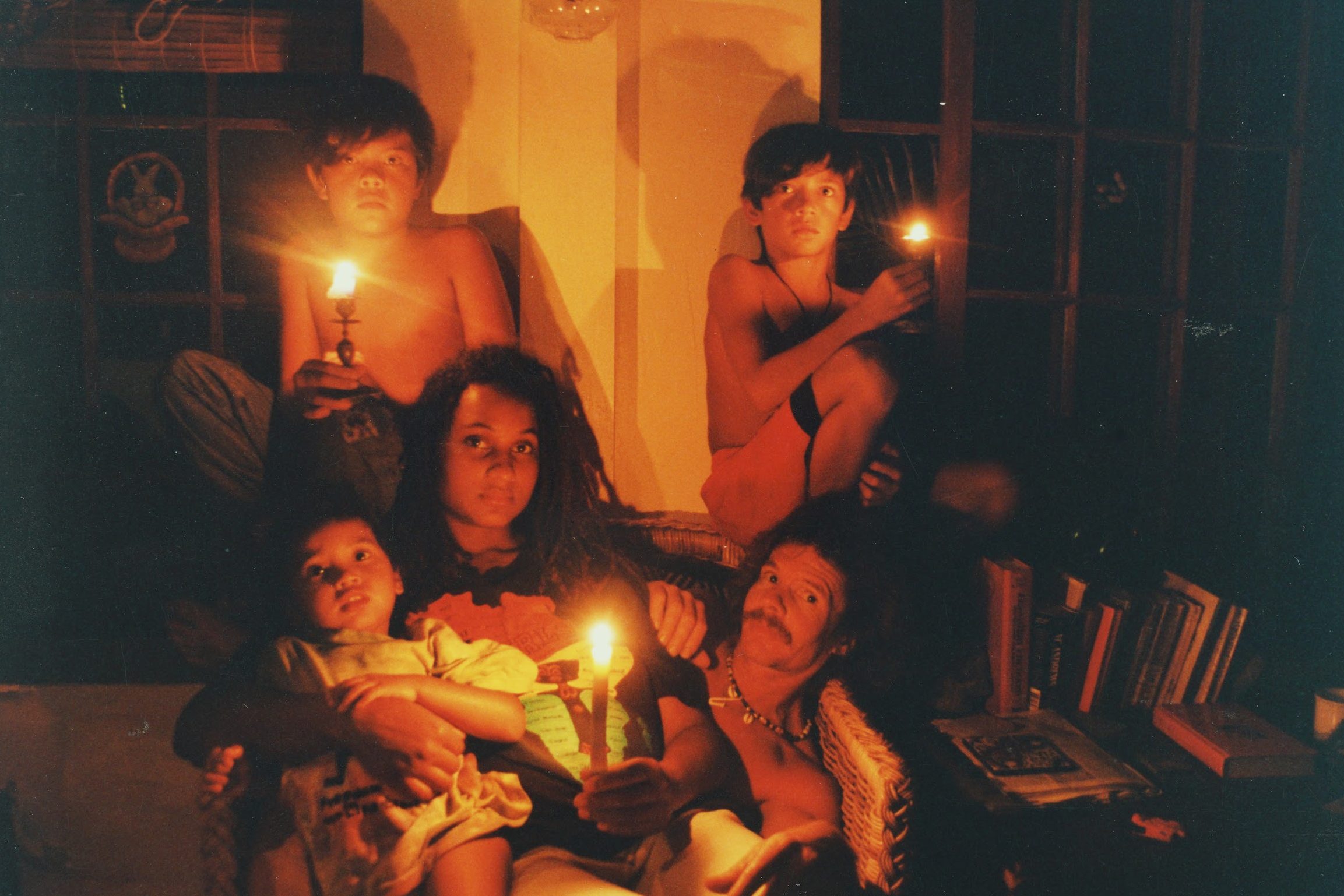
This essay was first published in the Fall 2023 Issue of Carve Magazine.
A BATH: Water is boiled in a tall, stainless steel pot. Its lid has eyes that open for the steam. I stand on a chair to check the condition of the water. I know the phrase, “a watched pot never boils.” I watch anyway.
Burnt potholders are for carrying the water the few steps to the bathroom. You have to tread carefully. No one will ever forget the way the water spilled too soon onto Nia’s foot. The skin blistered before our eyes. The water goes into the larger of the two buckets. At about two and a half by three and a half feet, it’s an exaggeration to call it the perfect size for me. Even I am too big. Dad folds himself into it like a fetus, but he likes it well enough. He falls asleep.
To get the bath to the right temperature, you scoop in cold water from the smaller bucket, under the tap of the tub. You feel with your fingers. If you add too much, there’s no going back. It’s better to start too hot. If I scoot my butt down, I can slide my head down the bucket, under the surface of the warm water. It muffles the sounds of Miles Davis, Louis Armstrong, Thomas Mapfumo, Macy Gray, Harry Belafonte, Claudia Gomez, Sheila Chandra. The sounds of onions sizzling, the boys arguing, the girls laughing, my other half—my little-bit-bigger brother—telling a story full of ums.
Mom is making chicken and giving out broccoli sticks. Dad is cradled as he likes into the confines of a wicker armchair. When he shifts his body, the body of the chair creaks. I didn’t make the bath tonight. It was Mom, and she made it for Kailea first. I’m the fourth to use the soft brown water. I call for help. Mom pours the water over my head with the plastic Tupperware dish. She does it again and again, washing the conditioner out.
Normally I hold out my hands for the towel to wipe my eyes open. I blindly trust that it will make its way to me. This time, I try something new. I wipe my eyes with my hands. I look to Mom for pride. She smiles. “Good job.”
Mom stretches her legs out of her crouch and swings her long, tiny braids behind her back. She goes back to the kitchen, sliding the door closed behind her. The water is not quite warm enough anymore. I pull the Japanese screen window shut, wishing the steam could come back. I have another go with the Barbie. She dives spectacularly.
When I get out, I drape my towel around my shoulders like a cloak. I’m cold. Mom braids my hair in two sections. I want to wear the fleecy pink onesie that is always too hot after a while.
Dinner: Chicken, rice, broccoli. I put too much shoyu on my rice, but I lick my plate clean anyway. I ask for a sip of Mom’s wine. My wish is granted, and the taste is awful and familiar. I pretend to like it.
After dinner, there will be a story. Dracula, most likely. We will pile onto the bed in the living room. The boys will stay to listen. Dad will be curled up and sleeping in his chair. The moths will kill themselves for the gas lamps. The geckos will click their addendum to the story. A rat will walk silently across the windowsill, and I will be at once repulsed and intrigued by its soft gray body and pinkish tail. My hot mug of Sleepytime will sit full and forgotten nearby. I will grab tightly onto Mom’s hole-ridden T-shirt when my eyelids begin to drift closed. She will not be able to get away this time. (I do this every time, but she always gets away in the end. I wake up and she is not there.)
***
From the backseat, I ask Mom for a story “from when you were little.”
“In Synanon,” she begins, she was given a stuffed bear by an older girl. The bear was a boy, she decided, and she named him George. I know George. The incisions of his holes are hard like burns, and his cotton ball-like stuffing comes out easy like boogers. He has only one eye, and his nose is in rough shape.
“I used to draw girls and cut them out like paper dolls,” she says.
“I filled notebooks with stories.” There was one about a girl and boy who tell their parents they are going on a trip to visit a big sister. Their parents say okay, and the kids go and have a really good time, eating tons of candy and playing in a barn full of hay.
“I used to walk miles and miles in the hills.” The grass grew long and brown.
“One time I walked all the way to the adults’ property with another little girl, looking for her belt.” They walked several miles in the dark, and when they got there, they went straight to the cafeteria, sat down, and ate dinner.
“I was walking in the dark and I saw two eyes shining and the outline of a great big cat.” She held its gaze and didn’t move a muscle. Eventually, the mountain lion went its own way.
***
When Mom is at work and everyone else is at school, it’s just me and Dad. I sit with him while he reads The New Yorker. He rests his arm on the sofa back, and I curl into the negative space. “Your puzzle piece,” I say.
I sit with him in the workshop. I scoop handfuls of the sawdust, letting it slip out between my fingers. I prefer the soft, fine dust from the bandsaw. The workshop is loud with the gas burner and generator. Dad reaches for the hot pokers in the glowing red furnace. He sticks them into darkened bamboo cuttings to make finger holes. He presses reeds to their whittled mouths and blows. Music comes out. I have a stool here for sitting. Dad wipes off the dust with a boar hair brush so it’s clean for me. It’s too loud to talk.
Outside is the yard: wide-leaf grass and no poky sleeping grass (Dad has uprooted every sprouting on four acres). A rope swing, threaded through a metal bar for a seat and tied at the top in a triangle. Coconut trees, a banana patch, java plums, palms, mangoes, avocadoes, papayas, Norfolk pines, awapuhi, birds of paradise, white spider lily, Madagascar Periwinkle. A sloping hill good for rolling and slip-n-sliding down. A mess of hau bush bordering us from the dirt road. It twists like the jungle. This is the jungle, but I don’t know to call it by that word. The jungle is about other places, not here.
Dad and I eat French toast, canned corn, and omelets stretchy with parmesan. I make the French toast and corn; he makes the omelets. Dad likes his French toast with butter and a little salt. I like Aunt Jemima’s syrup. The corn swims in a butter bath, speckled liberally with black pepper. Dad makes the omelets half-spicy with Tapatio for him, and leaves the other half plain for me.
He takes me to Town. I wear sunglasses with red plastic frames. We spend lifetimes at the post office, where the xaphoons (the bamboo instruments) are sent to the waiting world. We refill our propane tanks. We go to The Ale House in the afternoon. Dad talks to another man on the small, low stage. They carry in amps from outside. I sit at the bar and order a Shirley Temple, more for its name and mini umbrella than its bland flavor. I am such a good little girl; the waitress tells me so. An off-the-clock magician passes a small red light into my palm and tells me if I hold it in my hand very tightly until I get home, it will still be there. A snag of disappointment and suppressed disbelief will yank at the walls of my childhood when, hours later, he turns out to be wrong.
***
I believe in Santa Claus. The Easter Bunny is real, even though I have seen Mom fill our baskets. Logic rushes to fill in the gaps and explain away the discrepancy. She and The Bunny work together. I have never seen The Bunny, but he is not like the little black one with the cage at the corner of the house clawing at the sides of my memory. (We used to have one, right?) The Easter Bunny is as tall as a man, standing on its hind legs, with a suit and vest—even a watch chain.
When Dad and I get home, the boys, the girls, and Mekila are back from school. The little red light is gone from my palm, causing me to wonder when exactly it disappeared, and when exactly my fist was not impeccable. Its disappearance bothers me, but I don’t mention it. The mystery is mine alone.
Together, Mekila and I are “the little ones.” We belong together as a fixed unit. Mekila has his shirt off, and I take mine off, too. We make our way between the bushes and the side of the house to our wooden slat, balanced on two propane tanks. Our workshop. We’re making blades by sharpening the tips of long, pointy stones with other stones. It’s a work in progress.
About the house: It has the kitchen, Mom and Dad’s bedroom, the bathroom, and the bed where Mekila, Kailea, and I sleep. There’s also the outhouse, which has the toilet; the keiki, a large open-air room named for the daycare Mom and Grandma Glenda once ran (Keiki Learning Center); two back rooms off the side of the keiki, where the boys sleep; the gypsy wagon; the library down the hill, built over the pasture (lots of people stay here for a while at a time); and next door, a little house with a yard behind the bushes on the other side of our driveway. Next door is part of the same land.
Tabitha used to live next door, with her three snotty blond children called Hana, Hailey, and Hunter. They had a metal slide that scorched your thighs on a sunny day, with screwheads that snagged your clothes. Tabitha was “on drugs.”
Aunty and Joel used to live in the gypsy wagon, but now they live next door, with little baby Moziah. I saw the baby the day he was born. Kailea walked me down the dirt road past their house, and Joel came out to the porch to show us the little dark-green bundle from across the sprawling yard.
I know how babies are made. I know about sex. Mom and Dad make the sound of sex behind their closed door, hours before bedtime. Mekila and Ashlee and I make the Barbies hump. They do the splits on top of each other. There are also the movies. Patsy Cline and that guy on top of each other, rolling around and around. Species II. The women who, minutes after sex, grow rapidly pregnant. The alien babies slice their tentacles through the skin of their abdomens. This one is science fiction (not real).
Mom loves movies, and she brings them home in stacks from the video store. We’re only allowed movies after dark on weekends, but that’s where the rules end. There is nothing we can’t watch. Mom rents her favorites over and over again: American Werewolf in Paris, Jesus Christ Superstar, Species. She’s also a fan of the rom-com: When Harry Met Sally, Love Potion No. 9. Other repeats: Anne of Green Gables, Sister Act, Under the Tuscan Sun. The last one comes out in 2003, and for a while, it will be the only movie I’ll recall Dad sitting through in full, in his prescription sunglasses. He’ll love it.
Otherwise, Dad does not love movies. He dislikes TV even more, though he keeps a small portable pink TV set for watching LA Law on Thursdays. Other than LA Law, Dad dislikes TV. One night, while Dad is at a gig, the boys extend the antenna on our VCR as far as they go and fix foil onto the ends. Reaching a signal, they fiddle through the stations until they find The Simpsons. I’m entranced. I’ve never seen TV at home, commercials and all. I’ve never seen The Simpsons, either. Dad comes home in a rage, flinging open the creaky door, ripping off the foil, and unplugging the VCR. We’re sent to bed.
Movies, I learn, are proper, decent—no matter the content. TV, on the other hand, is a vulgar thing. Even as an adult, I’ll be shy and ashamed of watching anything in the middle of the day, especially TV. Around other people, I’ll often feign indifference. Video games are worse. I’ll barely be able to conceal my disdain.
As with movies, we are allowed a free pass with books. Nothing is off-limits, except for the work of Marquis de Sade. He wrote about “sexual violence against children.” The warning is hearty enough that we stay away, though the books—untouched relics from our parents’ erstwhile used bookstore—are there in plain sight on the shelf of the library.
More about sex: Mom is the one to tell us all about it. We’re taught about the penis in the vagina type, nothing non-heteronormative, nothing about oral pleasure. Just procreational stuff. We know what rape is. We know what molestation is. We know about perverted strangers who want this type of thing. We know to only approach strange women in an emergency, though we understand that even women can be bad.
“I was waiting at a bus stop on the highway late at night in Boulder Creek, and this sedan creeped slowly past me. It gave me a bad feeling, so I crossed the street. The car did a U-turn. I crossed again, it followed me. I could see the passengers through the window,” Mom says. “It was a man and woman. The guy had curly red hair and the woman had this long fluffy hair. They were totally dead in the eyes.” She took off at a run, the car at her heels, looking for a ditch to hide in. She dashed into a neighborhood she didn’t know was there. She knocked on some door and the woman who answered took one look at her face and pulled her inside.
Dad has his stories, too—though they’re often not about him. His hero is the man who tied enough weather balloons to his lawn chair that he floated into the Long Beach sky. The story probably means even more to him because Dad is also from LA, and manipulated all his oddball traits to maneuver himself as far from tinseltown as he could get (hence the jungle on Maui). An eccentric story, good for children. A popular animated movie would be made years later following the same kind of plot. Years after that, Dad and I will Google the actual guy who did the stunt: Larry Walters. When we find out that Mr. Walters took his own life in the end, in the least eccentric, most desperate way (by gun), Dad will get pretty sad for a minute. He’ll lift his eyebrows and tilt his head, breathe in like he’s going to say something, then just sigh.
One story about Dad is that when he was subject to draft for the Vietnam War, he hitchhiked from art school in Portland all the way to LA. His draft board was in Inglewood, and when he got there, it was staffed that day by one person, a middle-aged woman. He told her he wasn’t going to go to Vietnam and that he’d like to begin his prison sentence as quickly as possible so that he could get back to school.
“Son, nobody here but me,” the woman said. “I suggest you just go on back to school.” Something like that.
It worked. Dad never went to war. Instead, he painted. He played music. He had a little boat. One day, he was playing a saxophone by the water, and a little boy came to listen. He wanted a saxophone for himself. Dad made him a whittled little something of wood with a reed. He blew on it and it made a big sound. The boy took it and ran off, and Dad made himself another. Then he made some more and sold them on the street. Later, when he moved to Maui, he made a whole bunch of these “saxaphoons” out of bamboo. He started calling them “xaphoons.” He sold them in a little store in Lahaina before he moved onto the land in Huelo. Now he supports six kids on the sales.
***
Dad likes things like black coffee, tango, salami, Irish Spring bar soap, mowing the lawn, frizzy hair, falling asleep in the bath, B&B and a coffee back, The New Yorker, books by Anaïs Nin, Isabel Allende, and Gabriel García Márquez, Costco, smoked salmon, Nesquik chocolate milk, Cherry Garcia ice cream, tomatoes, poke and poi, Sambuca, pistachios, and arguing his point.
Mom likes china porcelain, crème brûlée, hand-sewing lavender pillows, Safeway cake, coffee with milk and sugar, croissants, gardening, reading books including Dracula, Heidi, Anne of Green Gables, Mary Poppins, The Wolves of Willoughby Chase, The Witches, and A Little Princess out loud at bedtime, snapping spearmint gum, beach walks, Chardonnay, and throwing massive holiday parties.
The one that becomes legend is the Easter she invited a hundred people, thinking only half would show. They all came, and the outhouse overflowed. We had to get it pumped. Or did we? Dad will claim no, the outhouse doesn’t overflow; it composts; it’s all just dry poop down there. But others will recall the truck and the company name: Suck ‘Em Up Pumping. Keawe will remember getting “splashed.” So what the hell happened? Dad’ll weigh in: “The level had risen over the years, and since it was quite solid, liquid would form on the top and there was occasional splash back (yuck). We did spend some effort using the nose of the suction pipe as kind of a shovel to loosen chunks of petrified poop to rattle up the hose, but in the end it only bought a few years’ grace.” Eventually he will excavate it and dig a much deeper hole. But, as I will sleuth out in my twenties, after years of misinformation, the pumping is unconnected to Easter.
It’s all silly stuff, but the integrity of every fact will take on enormous importance once I’m grown—once my family is forever changed, fractured, scattered to the four winds. I have to get it right.
It’s Easter. Grandma brings her camcorder. She puts raisins in the plastic eggs. “Raisins?? Yuck!” Mekila doesn’t bother with them. I give them a try. I chew with a frown. I tumble down the hill, hunting for more eggs. We dyed them last night. I peel one and eat it. The whites are blue and it affects the taste a little. It’s not very good. I also eat a lot of candy—Jolly Ranchers, chocolate bunnies, crunch bars, the little strawberries, hard on the outside and soft within, jelly beans melting into the plastic grass. Dad plays the steel drum. Larry, Nia’s dad, is on doumbek. Grandpa Roy plays his drum kit.
It’s Christmas. We open presents in the morning. Dad collects the wrapping paper in a big five-gallon bag. He hams up the role. He’s the trashman. Our stockings contain Lindor truffles, Japanese plum and rice candies, ballpoint pens, socks. Uncle Wolfgang and Aunty Doreen are here from Canada for the winter, staying in the gypsy wagon. They give us silver rings. Mekila made me a Harry Potter broomstick, the wood cut from the hau bush, skinned and painted gold; the twigs collected from the fern patch, each leaf discarded. In the evening, the big party. Mom whips the cream by hand. She makes personal crème brûlées and torches each one herself. She washes all the dishes under the tiny trickle of rainwater from the sink. I eat so much, my stomach so taut and full, that I have to walk doubled over.
It’s an ordinary evening. Dad is at a gig. Mom makes an extravagant dinner and I overindulge. Later, Dad has a talk with Mom, concerned that she’s overfeeding the kids. He spoke to me, he says. I described how the delicious things just kept coming. “And then Mommy brought out the chocolate cake.”
It’s Halloween. I’m a princess. Mom paints our faces and drives us to Skill Village. We trick-or-treat with pillowcases, freeze our candy, and eat it over the course of a few months.
Mom likes candy as much as we do. She tries to battle her sweet tooth, cutting out sweets now and then. Another time, she buys a giant bag of candy from Kmart. This time the method is to eat herself so sick she’ll never want candy again. It doesn’t work.
“In Synanon, we weren’t allowed sugar,” she says. “They used to sweeten everything with saccharin.” The bitter aftertaste never agreed with her.
“What’s Synanon, again?”
“Synanon was the commune I lived in with Grandma.”
In Synanon, no one was allowed to eat any sugar, and they all had to shave their heads.
When I’m twenty years old, I’ll shave my head. I’ll come home to Maui from school in Vermont and Grandma Glenda will say, with delight, “we’ve all had shaved heads now.” This will be several years after Kailea shaved her own head on a camping trip. Mekila will shave his head several times. When Grandma refers to all of us, she will be talking about her, Mom, and all of Mom’s kids: Kailea, Mekila, and me. In our family, we’re often vaguely referred to in sections. We all know what we mean.
If you want to know if Synanon was a good place, the answer will depend on who you ask. Grandma had a pretty good time there over all, even though they kept her daughter on a different property, and she was forced to leave her husband and pick someone new after the leader’s wife died. Even though she was eventually made to leave, unceremoniously in the middle of the night with Mom, Grandpa, and his daughter and her hundred dollars. It’s not that Grandma thinks these things were okay, it’s just that the pros outweighed the cons for her. It was better than being a single mom in ‘70s LA, on those toxic antidepressants. In Synanon, there was nature. There was community. There was dancing.
Mom doesn’t have much of anything good to say about it. No sugar, shaved heads. They made her live on the children’s property, run by sadistic fools called Demonstrators. They made her call her mother by her first name. To this day, she barely calls her Mom.
***
I have my own stories:
I’m three. No one can find me. They look all over, even (chillingly) shining a flashlight down the hole of the outhouse. Joel volunteers to drive up the road to expand the search. He finds me half a mile from home, following Ikeala the dog.
I’m three. Aunty Rosa and Joel live in the Gypsy Wagon. They’ve worked hard on a little flower garden, and all the zinnias have bloomed. I pick the lot of them. Joel is furious, but Aunty can’t stay mad. She makes me a flower crown and hands me the rest in a bunch. She takes my picture.
I’m three. Mom wonders why I’m never hungry for breakfast. Then she discovers I’ve been breaking into Aunty and Joel’s cooler on their porch every morning and stealing slices of their bread.
I’m I-don’t-know-how-old. We’re watching Conan the Barbarian. I’m wearing a leopard-print dress and eating a chicken drumstick with a supremely greasy face. My hair haloes my head with frizz. The theme song is playing and I’m dancing along with rhythmic pounds of my feet.
I’m four. I talk to Grandpa Roy on the phone every day. He has cancer and I have no school. “What if we could fly? I would fly to your house and then we could fly to the beach and go swimming.” One day, Grandpa tells me that when no one answers the phone, I can leave a message. “Do you know how to do that?” I do. Next time I call and no one answers, I go out to the sandbox in the little yard connected to the keiki. I take a stick and write: Grampu call me. Luv Viva. I don’t know how it will get to him, but I guess it will if he said it would.
I’m a baby. I’m sitting in Mom’s lap. Kailea tries to cuddle Mom, but I put my hand up. Stop. No. Don’t come any closer. “You thought I was just your mom, no one else’s.”
This one’s not much of a story, it’s just nice: I’m a little older. It’s Mom’s day off. Morning. She walks down the stairs. Her long braids are clipped back and pulled to one side. She’s wearing a nightgown. She always wakes up congested, and she does her morning sniffs. For breakfast, she toasts a massive hunk of French bread in the broiler. She spreads butter on, thickly. When she bites into it, it’s still steaming. I already had Lucky Charms, which, at the time, I thought was the wisest choice. But now I want what Mom has. She makes everything look good. The butter drips and pools on her plate. She smiles at me. I love her. I’ll remember this moment forever—the softness of it. It’s quiet. There’s not a lot to say. It’s just her being here, her slow wake-up. The nightgown is loose, no waistline or elastic to speak of. Cotton. It’s such a faded light blue it appears white. No sleeves. She lets me have a few heavenly bites of her toast.
***
There’s a song Mom sings, way up in the sky, the little birds fly.
You fill up my senses, Grandma sings.
As I, me, walkèd on a May morning. Dad.
You shall have a fishy for your little dishy. Grandma. You shall have a fishy when the boat comes in.
Mekila and I sit on the kitchen counter. We put our right hands over our hearts and sing loud, with our mouths wide open. Follow every rainbow ‘til you find your dream.
When Mekila was little, he woke up at five in the morning every day, put on rain boots and nothing else, and ate dog food. Then he blasted our Jackson Five CDs, singing along with a clear voice.
Dad plays xaphoon, of course, saxophone, steel drum, marimba, santur, guitar, ukulele, cavaquinho, bongos, doumbek, cuica, bateria, mbira. He can make decent music from a violin and an accordion. He can make decent music from anything.
The noise from the generator in the workshop or the xaphoon torch in the keiki is near-constant. Mom blasts classic rock in the car. Led Zeppelin, mostly. Sometimes—most of the time—I would rather hear no music. I like silence. My zealous infatuation with music will come later, but as a child, I’m prudish when it comes to sounds. If there’s to be music, I prefer it soft. My first favorite song is “Lucy in the Sky with Diamonds.” My first favorite band is Peter, Paul, and Mary.
Dad plays regular gigs at Tommy Bahama. One such gig falls on his fiftieth birthday, and we surprise him. He’s doing the tourist show, wearing an aloha shirt. His sax hangs from a kukui-nut strap. Steel drum. He’s played these songs hundreds of times: Everybody loves the hukilau. And you, my brown-eyed girl. He doesn’t see us until we’re right in front of him, taking up several tables. He sees Mom, eyes wide, and who’s that next to her? He knows everyone in the front. He laughs. When he takes a break, he sits near me. His hair is golden in the tiki torch light. I’m drinking my Shirley Temple. The umbrella will come home with me for my collection.
Dad has a complex ritual of cleaning his sax. He pulls it apart into many little pieces at the dining room table. He wipes each part down with something smelly. The sax is very old, it needs constant care. It has to be played regularly. When he’s done cleaning it, it shines.
In the kitchen, Mom washes the dishes to Miles Davis. Dad hugs her from behind, moving his hands under her shirt a little. I see this and I hear them sometimes, upstairs, but I only see them kiss on the lips once. She’s on her way out. It’s a dry peck. Are they happy? On one occasion, Mom smashes the dishes on the ground. The police come. Why? They leave minutes later. Tempers ran high, that’s all. They are sent back up the dirt road, over the little guardrail-less bridge, back the mile to the highway, ten miles to the closest town. Will they divorce? No! (Yes, they will, of course they will.)
How did they get together to begin with? She rented a room, one of the back rooms. Dad didn’t normally rent out these rooms, keeping them only for guests, but Mom insisted on paying. This was before the keiki. She was a single mom. Kailea was two. Dad had three boys, Keoni, Keawe, and Kua, from his previous marriage. It didn’t take long before Mom stopped with the rent and moved into Dad’s room.
“Everything was dusty,” she says. “The clothes, the bed, everything. I sat on the bed and a big cloud of dust rose up.” It became clear that Dad didn’t sleep there at all. He slept curled up in his chair like a housecat. He was always a small man. When Mom asked for space in the closet, he told her she could throw all his clothes away. The ones he used he kept in his car. His town clothes. He wore nothing but a towel at home.
“What do you say we get married and have a couple of kids?” This was Mom’s idea. Dad agreed. Mom was soon pregnant with Mekila. Wolf and Doreen made the rings. When Dad presented hers, she went outside and threw up. Morning sickness.
They got married at Seabury Hall, one of the private schools. Mom didn’t want to plan the wedding. She left it all to Dad. All she cared about was her dress and her cake. The dress was rented—some giant, frilly nineties number with a long train. The cake she chose from Safeway. Great Grandma Gladys played jazz on her keyboard. Aunty Rosa and Aunty Jeanette were bridesmaids. They wore white crocheted mini dresses. Mekila was born by then, and, at six months old, he wore a little tuxedo.
Mom was mean when she was pregnant, she’ll tell me later. Dad got a vasectomy after I was born because he didn’t want to put up with her mood swings again.
“Why don’t you go find a lover and leave me alone?” Mom will tell me she really said this to him. His smell turned her stomach for a while. Everything turned her stomach. The butter had to be kept in the freezer for its smell.
In the jungle, a gas fridge is a dank fridge, and nothing stays good long. The butter is kept in the freezer through the duration of my childhood. I have to climb up onto the counter to reach the big knives so I can chisel off pieces. One day, at a sleepover, a friend will pull out a butter knife to cut butter. “That won’t do it,” I’ll say. “That’s just a butter knife.” And I’ll pause, for the first time understanding that a butter knife should cut butter; that’s why it’s named that way.
I’m born in the middle of the night, around two-forty in the morning. Aunty is with the boys in one of the back rooms. They’re watching House Party. In the birth room: Dad, Grandma Glenda, Grandma Gladys, Kailea, Mekila, and the midwives, Tina and Katie. I crown when Mom is on her hands and knees. Kailea is beneath her, watching me make my entrance. Nearly twenty-two years later, on Mekila’s birthday, I’ll be the first one to lay eyes on my nephew as he comes hurtling from Kailea, in her bedroom in California.
Mom always wanted to be a mom. For a while, it was all she really wanted to be. She dreamed of living on a farm, with chickens, cows, a big garden. She’d wanted to homeschool all the kids (which Dad vetoed in favor of public school). She got pregnant with Kailea when she was nineteen, and had her when she was twenty. By the time Kailea was four weeks old, Mom was teaching her how to read with letters written on giant boards. Mom also started on potty training right away. She’d hold infant Kailea over the toilet. She wanted a fourth child, but, again, Dad thought she was too mean.
Before Kailea was born, Grandma Glenda dreamed of her: a very serious child with light brown skin and an intensity in her eyes. Before Mekila was born, Grandma dreamed of twins. Little blondies with ringlets. We’re born two years apart, but we will be mistaken for twins over and over.
Nia lives down the hill, on Uncle Bill’s property, with her dad, his girlfriend, Stephanie, and Stephanie’s daughter, Ashlee. Nia and Ashlee come over a lot. They’re hanai: adopted family. Nia, in particular, spends a lot of time at our house. Sometimes she stays for a month. Then she misses her dad and goes home.
As an adult, Nia will explain that she was raised by her dad and a bunch of aunties. Mom is like Mom-Aunty. And Kailea is like sister-best-friend. Kailea + Nia = the girls.
Mom teaches us all to read. For me, it’s with Grandma Marion’s primer from 1917. Sue and Pat sat on a log. Sue has a cat. Pat has a dog. It’s dull stuff. I prefer to be out on the swing, making up songs. Or playing Barbie sex. Or with the real dogs: Chara, Mary, Bella, Mama, and Ikeala. I won’t remember Ikeala much. Later on, Aunty’s dog Nani has puppies, and we keep one: Puffy.
The dogs live outside only. They’re not even allowed into the keiki. They have their favorite spots, like Mama and Bella have this one spot in the bushes where Bella grooms her mom all day. Chara likes this particular spot on the corner of the high porch off the back room, where she can keep her eye on everything. Mary likes the low porch to the house. The dogs take off sometimes days or a week at a time. They come back skinny, carrying a chicken.
One time, Mom has us all in the car. We’re driving along the highway when we see our pack of dogs emerge from the bushes. We pull over, happy to see them. We call them over to say hi. It’s all wagging tails and hey girls. Then we get back in the car and keep driving.
Chara is alpha until she dies. We bury her by the library. Dad carves her name into a stone. After that, Mary and Bella fight for a week over the monarchy. It’s vicious. You pour the food and run. Eventually, Mary wins. She eats first from then on, even before her mama.
When Puffy arrives, she’s bullied terribly by the other dogs. Dad sees the mistreatment and doesn’t want another dog anyway. He says he never meant to have dogs. “I don’t think of them as mine; they show up and I feed them. They have babies and my wife wants to keep one.” He tries to send Puffy away. He takes her to the Humane Society and leaves her and all. But as luck would have it, this is the summer Kailea is volunteering there. One day she stumbles across the walk-in freezer and finds all the euthanized animals. She cries for Puffy. She’s a scrawny thing, like an African wild dog. (We know the name makes no sense; Moziah named her.) She’s shy. Nobody will take her. She’ll end up dead, like the others.
Dad concedes, buys Puffy back, and takes her home. Of course, as the youngest, she’ll go on to outlive all the other dogs. She’ll even outlive my parents’ marriage. Dad will warm to her over time, even coaxing her into the house at times. She’ll die toward the end of my first year in college. Dad will email us some words on her last days, along with a blurry photo of her—smiling, you could say, over her shoulder, you might say.
***
Mom’s a massage therapist. She works at the Grand Wailea. When she’s working a double and Dad’s at a gig, us little ones have to get watched.
When Kailea’s the babysitter, Mekila and I are the ones to make dinner. A go-to is canned corn and canned tuna mixed together. No mayo, no nothing, just that. It’s a combination I will never make again, past the age of six or so, but one that will never really stop sounding kind of good to me. We also make a lot of ramen and Kraft mac and cheese.
When Nia’s the babysitter, she makes the ramen and whiles away the hours IM-ing with a boy on the laptop in the back room. “I don’t like him, but I want him to like me. You know what I mean?” No, I don’t.
Sometimes Mekila and I are dropped off at Keoni’s. He’s a grown-up already, with kids and all. Pono is technically my nephew, but we’re around the same age. Keoni puts on Star Wars in the living room, and I drift in and out of it. Little Taniya shows me her plastic lipsticks. Outside, Pono and I try, unsuccessfully, to dig a hole with a stick. Keoni and Vanessa cook us white rice and sausage. Sometimes it’s the little sausages with the yellow cheese inside. These are the sausages I prefer.
When Keawe and Kua aren’t at their mom’s, they’re the babysitters. They dangle us upside down by the ankles. They drape blankets over their heads like ghosts and we play Marco Polo. I’m on the bed. Kua’s Marco. “Marco,” he calls. I don’t Polo back. He falls face down onto the bed, onto me, and my breath is knocked clear out of me for the first time in my life. I have the strength to get up off the bed, and Kua follows me, concerned. I stand by the wall. Will I ever breathe again? Is this it? After an impossibly long time, the breath comes shuddering back.
More about dying: One day, alone in the kitchen, I climb up onto the counter for a big knife for butter or something. I’m allowed to do this. Back on the linoleum, I hold its tip against my heart. I wouldn’t actually push it in, but I entertain the thought. I’m five, I have my whole life ahead of me—I’m nowhere near finding out what happens when you die. Maybe I should just speed up the process. The drama of the moment feeds the seed of something vain, romantic, and performative in me.
At the YMCA, I toss rings into the deep end for the big kids to dive for. I fall in. “My life flashed before my eyes,” I’ll tell my friends a few years later. It actually doesn’t. I lean over too far and then I’m wet, completely, all over, immediately, in a way that never happens when I inch slowly into a pool, the way I normally do. The pool water is that wonderful sort of reflective blue. There’s no reason I would keep my eyes open, but later I’ll remember the way the light shone through that blue crush. In my memory, Ashlee comes to save me not in her suit, but in one of her flapper dresses with the long tassels. It’s gold. Her long blonde hair is angled gracefully behind her.
Grandpa Jack dies when I’m very young. Grandma Glenda will tell me the story. All the adults are busy, making arrangements, so she takes Kailea, Mekila, and me aside to explain what happened. I look at her with my big blue eyes. “He died? He died?” I ask, over and over.
When Grandma Marion dies, I’m horrified to discover this elicits not my tears, but a giant, unconcealable smile. I’m a wreck trying to tamp it down. What is wrong with me?
When Grandpa Roy dies, same thing. Mom gets the call while we’re all at ballet class. We drive to Hale Makua, the care home, to be with Grandma Glenda—to be with Grandpa’s body. I can’t keep it together. I have to bite the insides of my cheeks to keep from smiling. I swing on the bicycle racks and Mom gives me a dollar to buy some Corn Nuts from the machine. The day is long. Mom and Grandma and Grandma’s friend have a lot to talk about. Kailea, Mekila and I go out to the front lawn. There’s this enormous plumeria tree, with blossoms all over the ground and on low-hanging branches. Without speaking, we gather as many as we can carry and bring them back to the room. Grandpa Roy is small in the bed. He wears a hat. His eyes aren’t quite closed all the way. Silently, my brother and sister and I adorn his body with the flowers. We start with a big heart over his chest, then cover him completely from the neck down. Grandma looks up to see what we’ve done. She has tears in her eyes.
***
There are ways to bring it all back. The scent and texture of the papery white casing around a salami. The scent of Herbal Essences rose shampoo and Ecco Bella vanilla lotion. The scent of fabric car seats baking in the sun. The scent of an open, mildewed paperback. The scent of termite droppings. The scent of a fresh, silky gas lamp mantle, burning like an asteroid. The scent of freshly-whipped cream. Red and green sprinkles licked from the crease of your palm. The clicking calls of the geckos. The sound of Mom’s emergency brake yanked up hard in the driveway, Robert Plant’s blaring voice cut off mid-howl.
There’s no way to bring it back. A month or so after Mom moves out and we start going back and forth, I turn ten. I have a Grease-themed birthday party. I wear a poodle skirt and a platinum blonde bob wig. The party’s at Mom’s house, and Dad arrives in blue jeans and a black leather jacket, his hair slicked back like John Travolta’s. I offer him a glass of water, hosting my father in the first place I will live without him. He stands around, sipping. He doesn’t stay long.
There are ways to bring it all back. A week before I’m to turn twenty-six, Grandma Glenda will die. We will dress her in white. We’ll pick plumeria and adorn her perfect body with the flowers. We’ll go through her home video collection. July, 1998. “Humpty Dumpty had a great fall.” I’ll reach out, giggling, anticipating the fall. Grandma will catch me in her arms. Easter, 1999. “Raisins?? Yuck!” I’ll run with chubby feet from Grandma’s windup chick, shrieking. I’ll tumble down the hill, hunting eggs. I’ll frown at a raisin in my mouth. Dad at the steel drum. Mom, achingly pretty—even prettier, if you can believe it, than I’ll remember—kneeling down to my level.
***
It’s very early in the morning—a school morning, but we’re stopping somewhere else, first. Mom has planned for the family to attend the grand opening of Hawaii’s first Krispy Kreme. We all pile into the car—even Dad comes. When we get to Kahului, it’s still dark out. In the parking lot, I notice Dad and I are matching, each of us in beige pants and salmon shirts; mine is a polo, his a button-down. We wait in a long line, watching the donuts assembly-line their way to our drooling mouths. Mom meets the CEO and gets his autograph. The donut, still hot, melts on my tongue.
“Your parents were in love,” Aunty Sarah will tell me in 2020. “Your mom would sit on your dad’s lap and they would read the same book.”
A few months into Mom’s pregnancy with Mekila, she began having second thoughts. She visited Santa Cruz. She missed her friends. Dad sent her flowers. He told her he missed her. She came back. They saw a counselor. By the time they’re married and I’m born, Mom is a 26-year-old mom to three and stepmom to three more. Dad’s forty-five, doing it all over again.
More than the broken dishes, I’ll remember the tense distance between them. More than the yelling, I’ll remember the stubborn talking over of each other.
I’m eight. Mekila’s ten and Kailea’s thirteen, and the three of us have shared a bed for as long as I can remember. No one sleeps in the house anymore. We sleep in the back room with one bed, and Mom and Dad sleep in the room with three beds. Why? Who the hell knows. Dad is stubborn. While he’s at a gig, quick, we trade rooms. He comes home and finds Kailea in his bed. It doesn’t take rocket science to figure out what happened. He goes to the next room. Mom is already asleep. They don’t talk about it.
In our new room, Mekila and Kailea each get lofts. I sleep in the big bed downstairs. I’m fastidious about making up my covers, and Mekila likes to tease me by messing them up on purpose. My temper can be violent, and I scratch him badly, even reach for a belt to swing at him. He dodges me swiftly and keeps his distance for a while.
Mekila has picked up the guitar. He idolizes AC/DC and Jimi Hendrix. He plays “Smoke on the Water” and “Satisfaction.” Sometimes he ropes me into keeping a beat on the drumset. Almost Famous is his favorite movie.
It’s our last Christmas before the separation, but we don’t know it. Mekila gets an electric guitar and a grunge pedal. I see he’s happy and I keep my mouth shut, even while the abrasive sound grates on my ears. Kailea gets a flat iron so she can have hair as straight as Mom’s perm. Dad has to turn on the generator so there’s enough juice to plug the thing in. “But you have beautiful hair.” Kailea rolls her eyes.
It’s natural in a family. You pull away.
***
Mom is staying up the road with Kailea, a wild-haired two-year-old with massive dimples and a gummy grin. Mom kind of knows Dad, but not really—not yet. She takes her little girl on a walk and stops by his house to say hi. “I was wondering if I could borrow a spatula.” It sounds like a line, but it’s not. Mom doesn’t do lines. She just needs a spatula.
“I have several spatulas, and you can have all of them.”
I can see him, Dad, smiling with his chest puffed out a little. His hands are behind his back. He shrugs a little, as though shy. Mom meets his gaze, serious, though not unfriendly.
“I just need one,” she might say. Maybe she doesn’t get it right away that he’s kidding.
Maybe Dad walks her back to her little place. She has a graceful way of expressing herself, even while somewhat devoid of emotion. The light reveals an unexpected reddish tone to her dreads. She moves a hand up to shield her eyes from the sun. She turns to him. She smiles back.
 Viva Wittman